
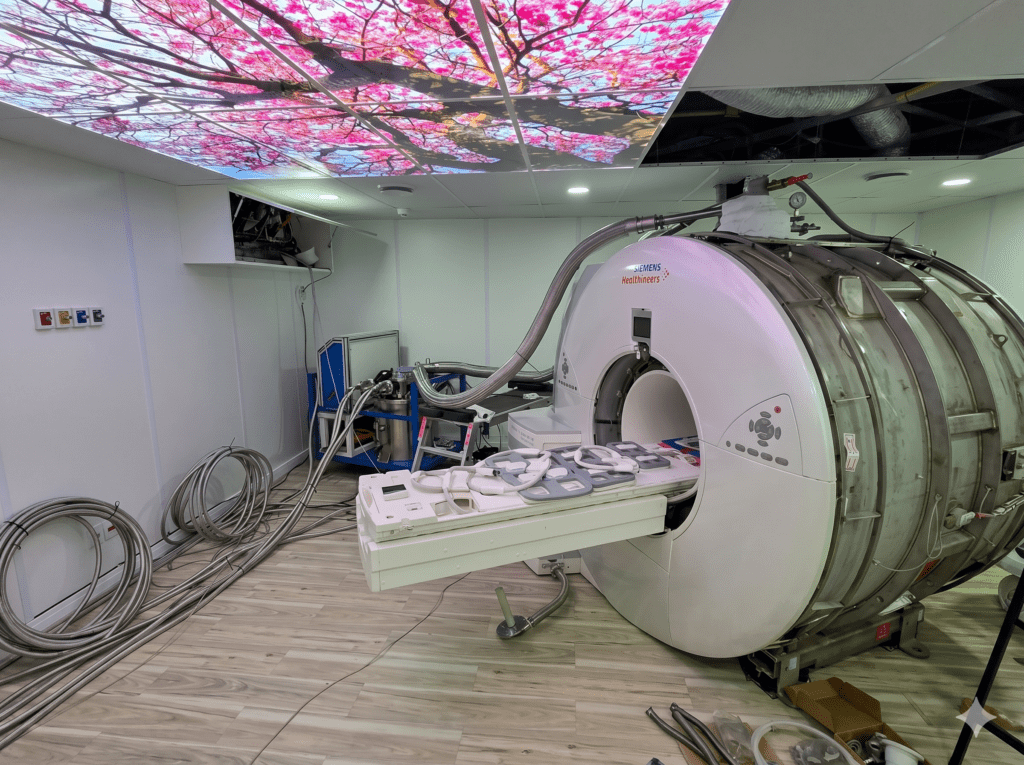
n MRI quench is one of the most critical events that can occur in a superconducting MRI system. During a quench, the magnet rapidly loses its superconducting state, causing liquid helium to boil off and the magnetic field to collapse.
While some quenches are intentionally initiated for safety or service reasons, an unexpected quench can result in significant helium loss, system downtime, service costs, and potential damage to components.
Understanding the conditions that can lead to a quench — and monitoring the MRI cryogenic system before those conditions become critical — can help service teams reduce risk and plan interventions more effectively.
What Is an MRI Quench?
Superconducting MRI magnets operate at extremely low temperatures. Liquid helium is used to maintain the magnet at the temperature required for superconductivity.
Under normal operating conditions, electrical current circulates through the superconducting magnet coils with virtually no electrical resistance, generating the powerful and stable magnetic field required for MRI imaging.
A quench occurs when part of the superconducting magnet transitions to a resistive state. The stored magnetic energy is rapidly converted into heat, causing helium to boil off and the magnetic field to decrease.
Depending on the system and circumstances, this can happen very quickly.
What Can Cause an MRI Magnet to Quench?
There is no single cause of every MRI quench. Several cryogenic, mechanical, electrical, and operational conditions can contribute to an event.
Low Helium Level
Liquid helium plays a critical role in maintaining the superconducting magnet at its required operating temperature.
An abnormal or prolonged loss of helium can reduce the cryogenic margin of the system. If helium levels continue to decline without intervention, the risk of magnet-related problems can increase.
This is why helium level trends should be monitored rather than relying only on a single measurement.
Cold Head Performance Problems
The cold head is a key component of the MRI cryogenic system. Its function is to provide refrigeration that helps control helium boil-off and maintain appropriate operating conditions inside the magnet.
As cold-head performance deteriorates, changes may appear in operating parameters such as temperatures, compressor behavior, helium consumption, or magnet pressure.
A failing cold head does not necessarily cause an immediate quench, but leaving cryogenic problems unresolved can increase the risk of more serious system conditions.
Warning Signs of Cryogenic Problems
MRI service teams should pay attention to changes in cryogenic behavior before they develop into larger problems.
Common warning signs may include:
- Increasing helium consumption
- Abnormal magnet pressure
- Unexpected changes in cryogenic temperatures
- Cold head performance degradation
- Compressor alarms or abnormal operation
- Changes in water or chiller conditions
- Repeated cryogenic warnings
- A progressive decrease in helium level
The importance of each parameter depends on the MRI manufacturer, magnet design, and system configuration.
